

Defence mechanisms
Your mind has a security system to protect you from what you don't want to feel.
They originated in psychoanalysis with little experimental basis. Scientific psychology has since found support for several of them, but not all, and often explains them differently.
Sound familiar?
You fail an exam and say "that subject is useless anyway". Or you have a bad day at work and end up arguing with your brother over nothing. Your mind is doing something to protect you.
What it is
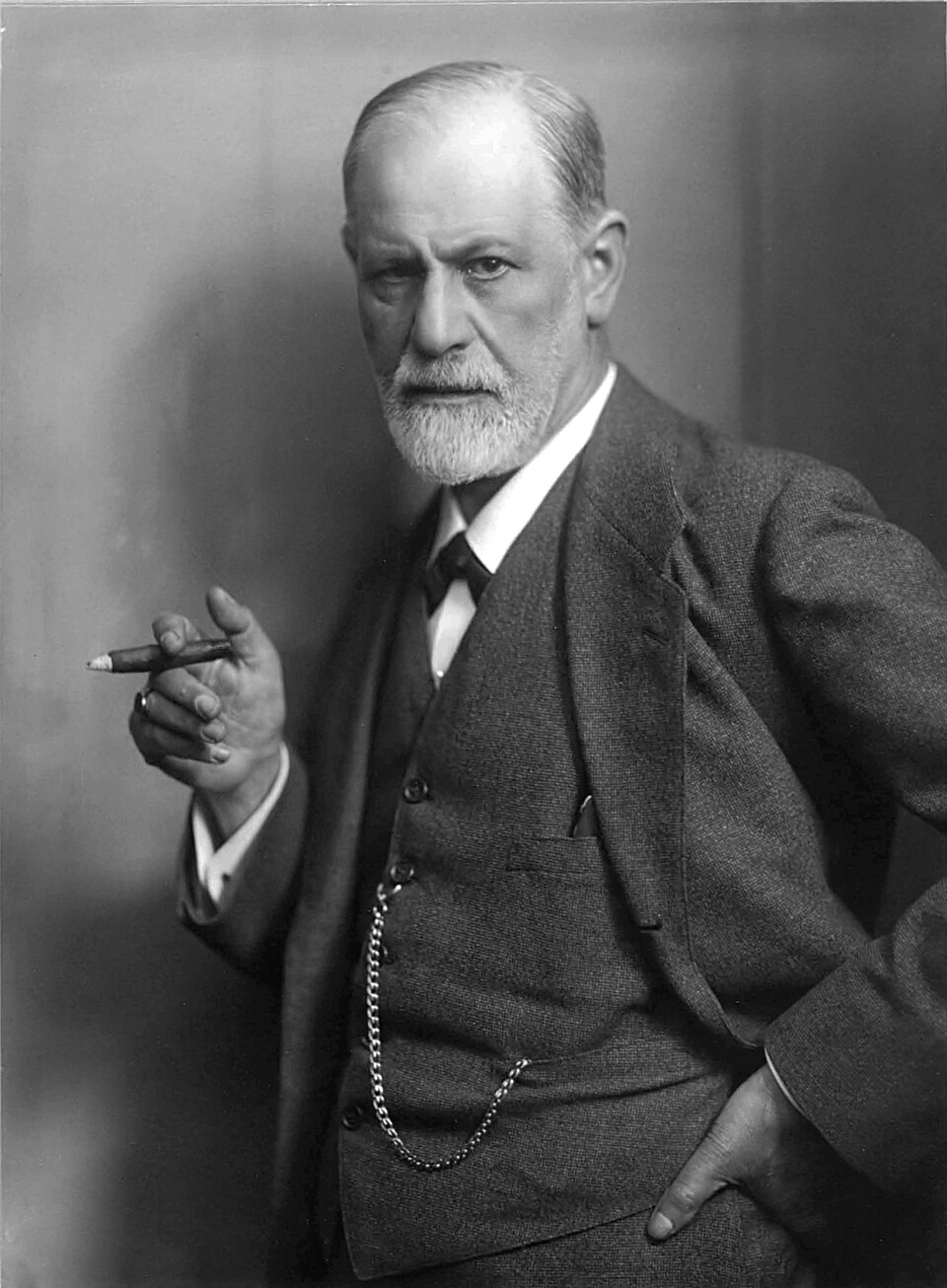
Sigmund Freud proposed that the mind uses unconscious strategies to protect itself from anxiety, guilt or thoughts we don't want to accept. His daughter, psychoanalyst Anna Freud, organised and described them in detail in 1936.1 Some of the best known:
- Denial: refusing to accept a painful reality ("I'm fine").
- Projection: attributing to others what we can't accept in ourselves.
- Rationalisation: finding logical-sounding reasons for something we did for other motives.
- Displacement: taking out an emotion on someone who didn't cause it.
- Reaction formation: showing the opposite of what we feel.
- Sublimation: channelling impulses into accepted activities, such as art or sport.
Putting it to the test
For decades, these ideas rested mainly on clinical observation. In 1998, Roy Baumeister and his team reviewed what experimental social psychology research had to say about seven defence mechanisms.3
Their conclusion was mixed: several mechanisms, such as reaction formation, denial and isolation, had substantial empirical support. Others, such as sublimation, found almost none. And in many cases the processes worked somewhat differently from how Freud had described them.
What we know today
Psychologist Phebe Cramer reviewed the field in 2000 and argued that defence mechanisms remain useful for understanding how we adapt to stress, and that they can be studied scientifically.2
As for displacement, a 2000 meta-analysis concluded that displaced aggression (taking it out on someone blameless after being provoked) is a real and consistent phenomenon.4
Myth vs. reality
Myth "Defence mechanisms are always bad."
Reality In the short term they can help us get through difficult situations. The problem arises when they become our usual way of avoiding problems instead of facing them.
In everyday life
- If something about another person really irritates you, ask yourself whether it has to do with you.
- Before letting your anger out, ask who you're really angry with.
- Tell reasons from excuses: would you do the same if nobody were going to judge you?
Sources
- Freud, A. (1936). Das Ich und die Abwehrmechanismen [The ego and the mechanisms of defence]. Internationaler Psychoanalytischer Verlag.
- Cramer, P. (2000). Defense mechanisms in psychology today: Further processes for adaptation. American Psychologist, 55(6), 637–646. doi.org/10.1037/0003-066X.55.6.637
- Baumeister, R. F., Dale, K., & Sommer, K. L. (1998). Freudian defense mechanisms and empirical findings in modern social psychology: Reaction formation, projection, displacement, undoing, isolation, sublimation, and denial. Journal of Personality, 66(6), 1081–1124. doi.org/10.1111/1467-6494.00043
- Marcus-Newhall, A., Pedersen, W. C., Carlson, M., & Miller, N. (2000). Displaced aggression is alive and well: A meta-analytic review. Journal of Personality and Social Psychology, 78(4), 670–689. doi.org/10.1037/0022-3514.78.4.670