Introversion and extraversion
You're not "one type or the other": you sit somewhere along a spectrum.
Extraversion is one of the best-measured and most-studied personality traits. What isn't supported is sorting people into two fixed "types".
Sound familiar?
You have a great time at dinner with friends, but the next day you don't want to see anyone. Are you an introvert or an extravert? The question is probably the wrong one.
What it is
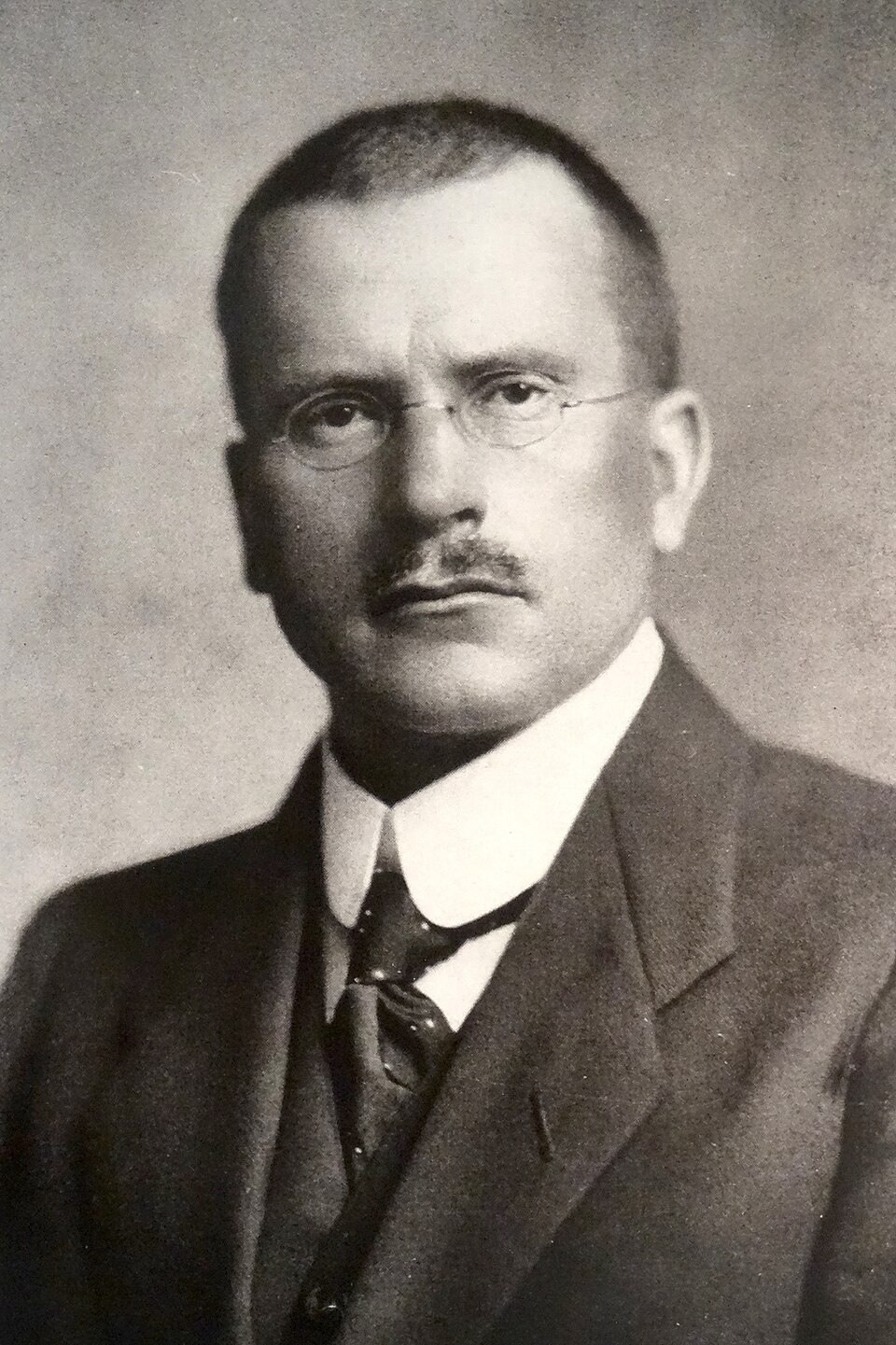
In 1921, Swiss psychiatrist Carl Jung published Psychological Types, in which he described two basic attitudes: introversion, oriented towards the inner world of thoughts and feelings, and extraversion, oriented towards the outside world and other people.1
Today, scientific psychology measures extraversion as one of the Big Five personality traits. It includes aspects such as sociability, energy, seeking stimulation and a tendency to feel positive emotions. It's not a switch but a scale: most people fall somewhere in the middle, sometimes called ambiversion.
The experiment
In 2002, William Fleeson and his team asked participants to note several times a day, for two weeks, how extraverted they were acting and how they felt.2 They found that everyone, introverts included, felt happier at the moments when they were acting more extraverted.
But in 2017, a similar study added a twist: extraverted behaviour was linked to a better mood in the moment, but to more fatigue about three hours later, partly because of the number of people the person had dealt with.3
What we know today
Shyness and introversion are different things. A classic 1981 study showed that shyness (feeling anxious in social situations) and sociability (preferring to be with people) are separate traits: you can be unsociable without being shy, and vice versa.4
And being highly extraverted isn't always an advantage. In a study of 340 call-centre sales representatives, the top sellers were ambiverts, not the most extraverted: they knew how to talk and how to listen.5
Myth vs. reality
Myth "Introverts are shy, and extraverts are happier and more successful."
Reality Introversion isn't shyness, and most of us are somewhere in the middle. Each style has advantages depending on the situation.
In everyday life
- Find your balance point: how much social life suits you, and when do you need to recharge?
- Plan some downtime after very social days, even if you enjoyed them.
- Don't label yourself: you can act extraverted when the situation calls for it without stopping being you.
Sources
- Jung, C. G. (1921). Psychologische Typen [Psychological types]. Rascher.
- Fleeson, W., Malanos, A. B., & Achille, N. M. (2002). An intraindividual process approach to the relationship between extraversion and positive affect: Is acting extraverted as "good" as being extraverted? Journal of Personality and Social Psychology, 83(6), 1409–1422. doi.org/10.1037/0022-3514.83.6.1409
- Leikas, S., & Ilmarinen, V.-J. (2017). Happy now, tired later? Extraverted and conscientious behavior are related to immediate mood gains, but to later fatigue. Journal of Personality, 85(5), 603–615. doi.org/10.1111/jopy.12264
- Cheek, J. M., & Buss, A. H. (1981). Shyness and sociability. Journal of Personality and Social Psychology, 41(2), 330–339. doi.org/10.1037/0022-3514.41.2.330
- Grant, A. M. (2013). Rethinking the extraverted sales ideal: The ambivert advantage. Psychological Science, 24(6), 1024–1030. doi.org/10.1177/0956797612463706