
The power of habit
Much of what you do each day, you repeat almost on autopilot.
Habit formation is one of the best-studied topics in psychology. That said, how long a habit takes to form varies a lot from person to person.
Sound familiar?
You get up, go to the bathroom, grab your phone, switch on the coffee maker… and before you know it you've done ten things without thinking about any of them. It's not laziness: it's your brain saving energy.
What it is
A habit is a behaviour that, after being repeated in the same context, ends up starting almost by itself when a cue appears (a place, a time, a situation), without our having to decide each time.
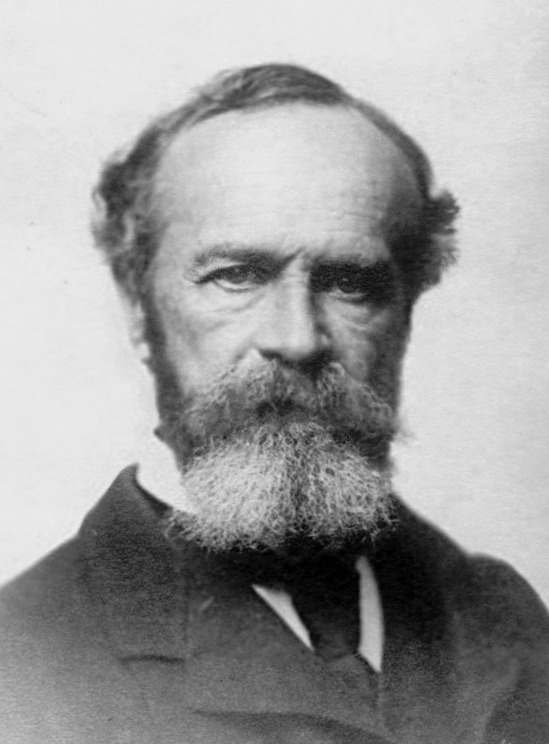
In 1890, William James, regarded as the father of American psychology, devoted a whole chapter of his Principles of Psychology to habit.1 He described habits as pathways carved into the nervous system by repetition, and called habit "the enormous fly-wheel of society".
The experiment
How long does it take to build a habit? In 2010, Phillippa Lally and her team at University College London followed 96 volunteers for 12 weeks as they tried to adopt a simple habit, such as drinking a bottle of water with lunch or going for a 15-minute run before dinner.2
The time it took for the behaviour to become automatic had a median of 66 days, but with huge variation: from 18 to 254 days depending on the person and the habit. What's more, missing the odd day didn't derail the process.
What we know today
In a diary study, Wendy Wood and her team found that around half of participants' everyday behaviours were repeated almost daily in the same context, and that while doing them people were usually thinking about something else.3
Current reviews explain that habits depend heavily on context: it's the cue (the sofa, the time of day, the phone on the table) that triggers the behaviour, more than willpower.4 That's why changing your environment is one of the most effective ways to break a habit or build a new one.
Myth vs. reality
Myth "It takes 21 days to form a habit."
Reality That figure was popularised by a 1960 self-help book by plastic surgeon Maxwell Maltz, not by a scientific study.5 The data show it can take anywhere from a few weeks to more than eight months.
In everyday life
- Attach the habit to a fixed cue: "after I brush my teeth, I read for 5 minutes".
- Design your environment: leave your trainers where you can see them and keep your phone out of the bedroom.
- Don't beat yourself up over a missed day: what counts is consistency over time.
Sources
- James, W. (1890). The principles of psychology (Vol. 1, ch. 4: Habit). Henry Holt. Full text at Classics in the History of Psychology (York University)
- Lally, P., van Jaarsveld, C. H. M., Potts, H. W. W., & Wardle, J. (2010). How are habits formed: Modelling habit formation in the real world. European Journal of Social Psychology, 40(6), 998–1009. doi.org/10.1002/ejsp.674
- Wood, W., Quinn, J. M., & Kashy, D. A. (2002). Habits in everyday life: Thought, emotion, and action. Journal of Personality and Social Psychology, 83(6), 1281–1297. doi.org/10.1037/0022-3514.83.6.1281
- Wood, W., & Rünger, D. (2016). Psychology of habit. Annual Review of Psychology, 67, 289–314. doi.org/10.1146/annurev-psych-122414-033417
- Maltz, M. (1960). Psycho-cybernetics. Prentice-Hall.